Video: Gear Websites on YouTube
There is a whole world of fun, flavor and beauty in mushrooms. If you are interested in them at all, the best first step is the same today as it has always been: get a few good field guides and start learning.
Identifying mushrooms is a skill built over seasons, not a single trip. Every mushroom you photograph and look up adds to what you can recognize next time.
What to Notice in the Field
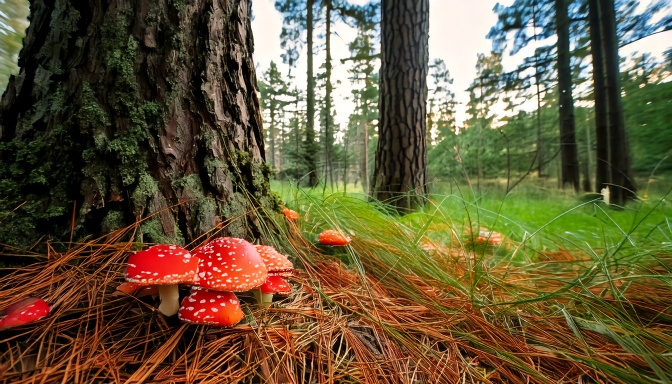
Where it grows. On wood or on the ground? Under pine, oak, fir or in grass? Many mushrooms only grow with certain trees.
Under the cap. Gills, pores or spines? How the gills attach to the stem is often a key clue.
The stem and base. Look for a ring on the stem and a cup or sac at the base. Dig the base out gently to see it.
Color changes. Does the flesh bruise blue, red or brown when cut or handled? Does it ooze milk?
Spore print. Set a cap gills-down on white and dark paper overnight. Spore color narrows down the options fast.
Photograph Everything
Take pictures from the top, the side and underneath, plus one of the habitat around it. Note the date, elevation and nearest trees. Good photos and notes let you check a field guide later and let experienced hunters help with an identification.
In southern Arizona, the best place to practice is the sky island forests during the summer monsoon. The Arizona Mushroom Society’s guided forays are another great way to learn, because experienced leaders explain what they see as the group finds it.
Never eat a wild mushroom unless an expert has identified it in person. Many Arizona mushrooms are toxic, and a few are deadly. A field guide is for learning, not for deciding what is safe to eat.